
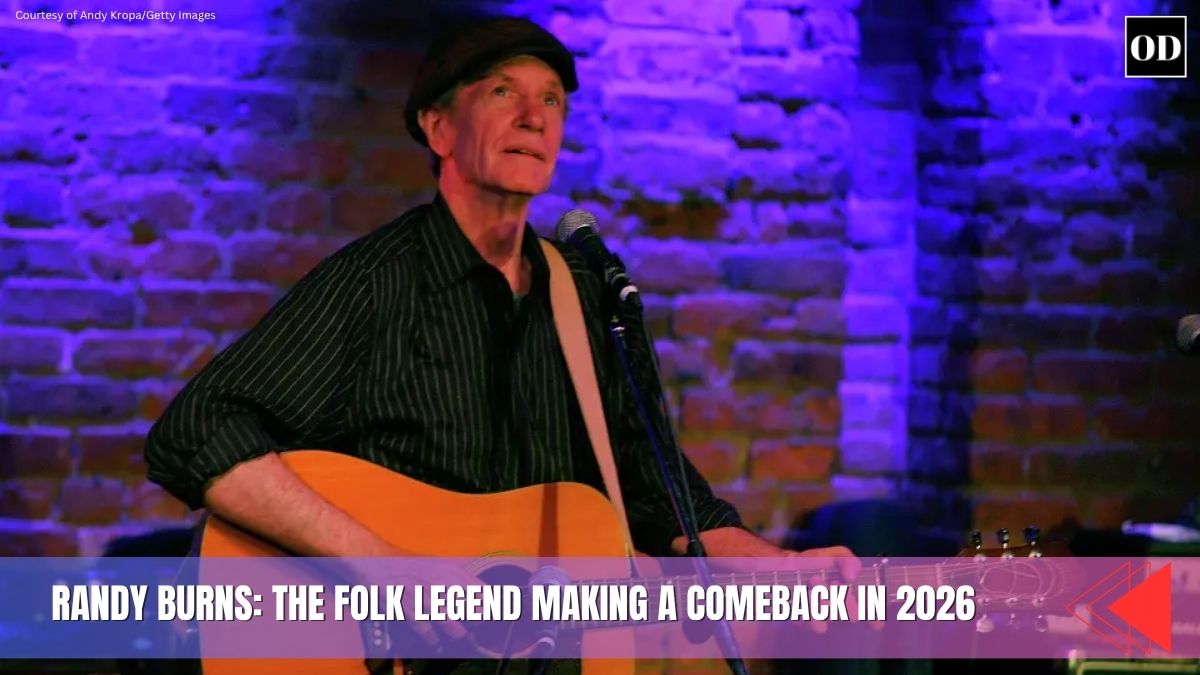
Randy Burns: The Folk Legend Making a Comeback in 2026
Randy Burns is having a moment. The legendary folk singer, whose career spans over five decades, is experiencing a resurgence in popularity as new generations discover his extensive catalog and timeless songwriting. Burns is proving that great music transcends time, and folk traditions are far from dead in the digital age.
Born Randall R. Burns on April 14, 1948, in New Haven, Connecticut, the folk troubadour emerged from the vibrant coffee house circuit of Greenwich Village during the 1960s—an era when folk music was experiencing its renaissance. Burns performed at legendary venues including The Gaslight Cafe and Gerdes Folk City, opening for icons like Tom Paxton, Phil Ochs, and Dave Van Ronk. It was during this golden age that he recorded his debut album, “Of Love and War,” on ESP-Disk Records in 1967, establishing himself as a serious songwriter within the folk community.
What made Randy Burns stand out was his unwavering commitment to authentic folk songwriting. He wasn’t chasing trends or commercial success—he was creating genuine, emotionally resonant music that spoke to the human experience. His work with The Morning and later Randy Burns and the Sky Dog Band showcased his versatility as both a performer and bandleader, recording for prestigious labels including Mercury and Polydor throughout the late 1960s and early 1970s.
The folk artist’s career took an interesting turn in the late 1970s when he relocated to Dublin, Ireland, for two years, continuing to perform in local bars and absorbing fresh influences. Upon returning to the States, Burns maintained his independence, releasing the cassette-only album “The Cat’s Pajamas” in 1991 on his own Picket Fence label—a DIY move that predated today’s streaming era by decades.
So why is Randy Burns trending now? The resurgence makes perfect sense when you consider the current cultural landscape. Younger audiences are increasingly turning to folk music and Americana as antidotes to algorithmic-driven pop culture. The authenticity, acoustic instrumentation, and lyrical depth of folk traditions offer something genuinely different in 2026’s oversaturated music marketplace. Artists and listeners alike are craving connection, storytelling, and raw human emotion—everything Randy Burns has been delivering for nearly 60 years.
Additionally, the folk renaissance has been amplified by streaming platforms finally giving catalogue artists their due. As younger listeners explore folk music on Spotify and Apple Music, they’re discovering not just contemporary acts, but the legends who paved the way. Randy Burns’ extensive discography is suddenly accessible to millions of people who would never have found it in physical record stores.
The trending surge also reflects a broader cultural moment. Gen Z and younger millennials are rejecting the polished, overproduced aesthetic that dominated previous decades. Authenticity is the new luxury—and Randy Burns embodied authentic folk artistry before it became fashionable again. His weathered vocals, poetic lyrics, and masterful guitar work represent a blueprint that modern folk artists still draw from today.
What’s remarkable is Burns’ longevity and refusal to compromise. In an industry that frequently discards artists once they’re past their commercial prime, Randy Burns simply kept creating, performing, and evolving. He represents a lineage of folk music that values artistic integrity over mainstream appeal—a philosophy that’s resonating powerfully in 2026.
Whether this trending moment leads to renewed recordings, a documentary, special performances, or simply a wave of music discovery, it’s a well-deserved recognition for a folk master who never stopped doing his thing.
 0
0
 0
0 
Average Rating